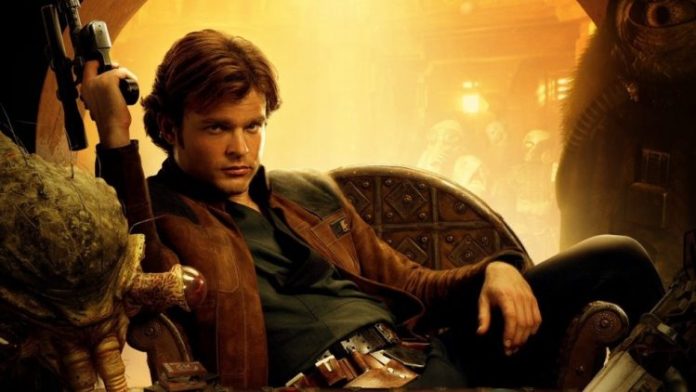
The Legal Geeks are returning to San Diego Comic Con with TWO Star Wars panels on July 20th. We are honored to share our love for Star Wars on the 50th Anniversary of the Moon Landing. Our panels this year are Judges on the Law of the Last Jedi and Solo and Star Wars Mock Trial: The Court-Martial of Poe Dameron. We are extremely thankful for being selected this year with two Friday panels and a third on Saturday. Below please find our Friday panel information:
Star Wars and the Law go together like Han Solo and Chewbacca. Join our panel of Judges for a discussion on the legal issues from The Last Jedi, Solo, and unexplored regions from the Outer Rim. Did Luke Skywalker have a legal obligation to save the galaxy from the First Order? What is the legality of underground Droid Fights? Could the Caretakers sue Rey for dropping a boulder on their cart? Was Han right when he first shot first? Find out when court is in session with Circuit Judge John B. Owens of the Ninth Circuit Court of Appeals, Magistrate Judge Stacie Beckerman, Magistrate Judge Mitch Dembin, CA Judge Carol Najera, NY Judge Matthew Sciarrino, and Paul Grewal (Former Magistrate Judge and now Deputy General Counsel and VP of Litigation at Facebook). Moderated by attorneys Jessica Mederson and Joshua Gilliland of The Legal Geeks.
The Legal Geeks and the Rebel Legion Sunrider Base present the mock court-martial of everyone’s favorite X-Wing ace, Poe Dameron. Based on the events of The Last Jedi, Poe stands accused of disobeying General Leia Organa and leading a mutiny aboard the Resistance flagship Raddus against Vice Admiral Amilyn Holdo. Lawyers for the prosecution and defense, including a U.S. Army JAG attorney, will take on Poe’s case in front of United States Magistrate Judge Mitch Dembin. Participating attorneys include Steve Chu, Thomas Harper, Christine Peek, and Megan Hitchcock. Rebel Legion members Rachel Williams will be General Leia Organa and Marcus Holt as Poe Dameron.
The rules of Sabacc might not have been said in Solo A Star Wars Story, but one thing is clear: Cheating is not allowed. The events of the card game at the Lodge at Fort Ypso raise complex issues of remedies with games of chance. Spoilers ahead.
Han Solo induced Lando Calrissian to bet the Millennium Falcon in a game of Sabacc against Han’s VCX-100. First problem: Han did not have a VCX-100. Second problem: the Falcon was impounded. Third problem: Lando cheated by having a card up his sleeve.
I’ve got a bad feeling about this.
Han’s Bluff on Having a VCX-100
Han claimed he had a VCX-100 (the same class as the Ghost in Star Wars Rebels), as his bet to induce Lando to call with the Falcon. This technically is fraud, because it was a material misrepresentation of fact. Gambling laws in the District of Columbia state that anyone by fraud who wins a game above the value of $25 shall forfeit five times the value of the item or cash one, and be deemed “infamous.” D.C. Code § 16-1704. That could have been a problem if Han had won, but for Lando’s cheating, Han lost. This is sort of legally a wash, as Han technically did not violate the statute and also lost all of his credits to Lando.
Poker Face
Lando has a full house of legal issues with his Sabacc bet. The first is whether he could have lawfully bet the Falcon, since it was impounded. While the bet of the vehicle was likely proper, he did not disclose it had been impounded, requiring an unknown fine to be paid in order for it to be released.
Lando had a device strapped to his wrist with a trump card that would enable him to beat other card players. This is the very definition of cheating. California has declared it is unlawful to cheat at any gambling game in any gambling establishment. Cal. Penal Code § 337x. The Lodge would qualify as a gambling establishment that allows Sacbacc games. It is further unlawful to alter the random selection of gambling games that determine the outcome of the game. Using a device to add a card clearly changed the outcome of the Sacbacc game and eliminated random selection of the cards. Cal. Penal Code § 337y(b)(2). The punishment for cheating is a jail term of at least one year or fine up to $10,000 for the first offense and one year and/or $15,000 fine for a second offense. Cal. Penal Code § 337z.
The only reason Lando won the game of Sabacc was because he cheated. The game was not “fair and square” and would result in criminal prosecution if discovered.
Han would have a difficult time suing Lando for the Falcon for Lando’s cheating. California has a public policy against using the courts to recover for gambling losses from alleged “rigged” games. Kelly v. First Astri Corp., 72 Cal. App. 4th 462, 482-83, (1999). As such, there is no real judicial relief for Han’s gambling losses to Lando.
Know When to Fold Them
Han Solo had a rematch with Lando where his buy in was a drop of Coaxium. More importantly for Han, he discovered Lando means of cheating. Han successfully won the Millennium Falcon “fair and square” without using Lando’s card to cheat. This was a sweet turn of justice in depriving Lando of his means of cheating.
Pretty sue Han let Lando remove his capes before taking possession of the ship.
Solo A Star Wars Story took aim at the first time Han Shot First. Spoilers ahead if you have not seen Solo.
Facts matter when it comes to the justified use of force. Tobias Beckett had kidnapped Chewbacca at blaster-point and absconded with the processed Coaxium on Savareen from Dryden Vos’s yacht. Han was able to head off Beckett and have his blaster drawn in order to save Chewbacca.
The Law of the Wingman
The “Defense of Others” is an offshoot of self-defense. Dating back to a long time ago in English common law, deadly force was limited to defend against the ‘forcible and atrocious’ crimes of “murder, nighttime burglary of a dwelling, arson, robbery, forcible rape and sodomy.” People v. Gilmore, 203 Cal. App. 3d 612, 249 Cal. Rptr. 914, 917 (1988) [Unpublished], citing 4 Blackstone’s, Commentaries, at pp. 180-181. These are crimes that from their “atrocity and violence, human life [or personal safety from great harm] either is, or is presumed to be, in peril.” People v. Ceballos, 12 Cal. 3d 470, 478-79, (1974) [Citations omitted].
Under California law, a homicide is justifiable when “resisting any attempt to murder any person, or to commit a felony, or to do some great bodily injury upon any person.” Cal. Penal Code § 197(1). It can also be used in the lawful defense of a person when “there is reasonable ground to apprehend a design to commit a felony or to do some great bodily injury, and imminent danger of such design being accomplished.” Cal. Penal Code § 197(3). There is a catch that if there was mutual combat, there must have a been a good faith effort to decline any further struggle before the homicide was committed. Id.
The law does not favor justified homicides by those who were the aggressors in the fight. For example, if a defendant went to a fight armed and initiated the challenge, “he cannot afterward maintain that in taking his assailant’s life he acted in self defense.” People v. Bates, 256 Cal. App. 2d 935, 939, 64 Cal. Rptr. 575, 577-78 (1967).
The jury instructions for both self-defense and defense of others require a defendant to: 1) Reasonably believe that someone was in imminent danger of being killed or suffering great bodily injury; 2) Reasonably believe that the immediate use of deadly force was necessary to defend against the danger; and 3) the defendant used no more force than was reasonably necessary to defend against the danger. 1 CALCRIM 505 (2018).
Going Solo
Han Solo was legally justified in shooting Tobias Beckett in defense of Chewbacca’s life and his own. First, Beckett directed Chewbacca at blaster-point to carry the highly explosive Coaxium. This is kidnapping, because Beckett forcibly detained Chewbacca against his will and moved him to another part of Savareen. See, Cal. Penal Code § 207. As Chewbacca had been kidnapped, Han could reasonably believe that Chewbacca was in imminent danger of being killed or suffering great bodily injury, meeting the requirements of the first element of the jury requirement.
Han reasonably believed the immediate use of deadly force was necessary to defend against the danger posed by Beckett. First, Han had seen Beckett in action with his blasters and knew Beckett was an expert shot. Second, Han had seen Beckett kill Vos’s men mere minutes before in a double (or triple) cross. Third, Han knew Beckett’s propensity to give “lessons” by monologue. Fourth, Han could see Beckett going for his blaster. Finally, and this cannot be overstated, the very act of kidnapping Chewbacca was a “forcible and atrocious” crime that could result in loss of life.
Han used no more force than was necessary to shot Beckett from using his blaster. While Han did fire a fatal shot, it was not excessive or a gratuitous use of violence.
Prosecutors could argue that Han was the aggressor because he confronted Beckett armed. That would ignore the fact that Chewbacca had been kidnapped after Beckett’s multiple murders on Vos’s yacht. Under the circumstances, Beckett was an immediate danger to Chewbacca’s life, and Han was justified to come to his friend’s defense.
We had the privilege of presenting on the legal issues with Kaiju, Universal Monsters, and Star Wars at San Francisco Comic Con. We presented each panel on Friday and Saturday, meeting many fantastic con goers who had awesome questions on the law.
Claudia Gray, author of the Star Wars YA books Lost Stars, Bloodline, and Leia: Princess of Alderaan, is a former practicing attorney from Louisiana. I asked Claudia if she would like to join our Saturday panel, which she graciously accepted. This was one of the energetic and fun-filled panels we have had at a con.
Early in the movie Solo we learn that a young Han has joined the Imperial military. Although he did not succeed as an Imperial pilot, we find him as a foot soldier on the planet Mimban. After complaining that he does not know what they are fighting for, Han tries to leave his post and escape from both the Imperial military, and the planet.
Not exactly an Imperial Recruitment Poster
SPOILER WARNING.
In that process, the Imperial military captures Han and tosses him into a pit to be fed to a familiar and very hungry Wookiee. My esteemed friend Thomas Harper has already covered the issue of Han Solo’s desertion in an excellent blog post. This writing will cover the punishment for Han’s desertion, and whether the act of feeding prisoners to a hungry creature would violate the prisoner’s Eighth Amendment right to be free from cruel and unusual punishment.
Hmm, needs salt.
First, a few assumptions: this discussion will take the U.S. Constitution and the decisional holdings of the U.S. Supreme Court and various federal courts and apply those precedents to what happened in Solo: A Star Wars Story. We will put aside the Geneva Convention for this write-up, and simply focus on the U.S. Constitution. As of the time of Solo, we know that the Galactic Empire has taken over the galaxy, with Palpatine as the Supreme Emperor. While the existence of judges and courts has been referenced in other movies during the time of the Old Republic, it would be unlikely that a similar court system would continue to exist during the tyrannical time of the Empire. Or, if such a system did continue to exist, it would be unlikely that the courts would actually defy the Emperor’s wishes and force him to bend his conduct to conform to established laws.
We see examples during the original trilogy where authoritarian rule prevails and individual constitutional rights do not appear to be of great concern. Notably, the Imperial Senate is disbanded, whole planets are destroyed as a warning to the rest of the galaxy, and Stormtroopers freely enforce the Empire’s will upon numerous worlds.
That brings us back to Solo, where, practically speaking, the Imperial military can do as it wishes. However, IF there were a functioning court system that upheld laws similar to those of the US Supreme Court and US Constitution, what would happen? Let’s take a look.
Join the Empire and get a cool uniform.
First, let’s examine why Han was being punished in Solo. He left his post and was trying to escape from the Imperial military and the planet Mimban. As noted in Thomas Harper’s write-up, this is desertion, which is a serious military crime and can be punishable by death. Therefore, the question of whether Han could be put to death is a bit of a different discussion. If the Imperial military operates similar to the militaries of our world, Han would typically be given some due process before being fed to the monsters. That would normally involve a judicial proceeding such as a court martial, with counsel to represent him. We will assume then, for purposes of this write-up, that after what, if any, judicial process is afforded to deserters of the Emperor’s army, Han has been found guilty and sentenced to death.
That then leads to our discussion of punishment which we can break into two parts: (1) does the mere fact of Han being sent for execution violate his Eighth Amendment rights; and (2) does the manner of feeding Han to a hungry Wookiee violate his Eighth Amendment rights?
The Death Penalty and the Eighth Amendment
The U.S. Supreme Court has held that the death penalty is not per se unconstitutional, as it can serve the social purposes of retribution and deterrence. Gregg v. Georgia, 428 U.S. 153, 183–87 (1976). However, the U.S. Supreme Court has also held that while punishment by death in and of itself is not cruel in violation of the constitution, the manner of execution can be said to be inhuman and barbarous. Furman v. Georgia, 408 U.S. 238, 241-42 (1972).
The Eighth Amendment to the U.S. constitution reads as follows:
Excessive bail shall not be required, nor excessive fines imposed, nor cruel and unusual punishments inflicted.
The provision that references cruel and unusual punishments finds its roots in the English Act of Parliament of 1688, entitled “An act for declaring the rights and liberties of the subject, and settling the succession of the crown.” That act provided that “excessive bail ought not to be required, nor excessive fines imposed, nor cruel and unusual punishments inflicted.” This declaration of rights referred to the acts of the executive and judicial departments of the government of England. In re Kemmler, 136 U.S. 436, 444 (1890).
The U.S. Supreme Court has observed that certain punishments have been considered cruel and unusual such as burning at the stake, crucifixion, and breaking on the wheel. In those cases, it is the duty of the courts to prohibit such punishments pursuant to the authority provided by the Eighth Amendment. The Supreme Court also noted over 100 years ago that it would be difficult to define with exactness the extent of the prohibition against cruel and unusual punishments. However, the High Court has noted that punishments are cruel when they involve torture or a lingering death. Kemmler, 136 U.S. at 444-45.
Over time, the Supreme Court has also observed that the definition of cruel and unusual punishments may change over time, and that the Eighth Amendment “must draw its meaning from the evolving standards of decency that mark the progress of a maturing society.” Trop v. Dulles, 356 U.S. 86, 101 (1958).
Gambling on the Eighth Amendment
That brings us back to Solo and the Star Wars universe. The authorities discussed above make it clear that the fact of Han being sent to death would not, in and of itself, violate his constitutional rights. We are then left with the manner of his attempted execution: being fed to a hungry Wookiee. It is very likely that being fed to a hungry carnivorous creature as a means of execution would involve considerable fear, pain, and a lingering death. The numerous victims of the Rancor from ROTJ would likely attest to that, if they were somehow able to testify. Being chased around by a starving carnivorous creature with the expectation of being consumed would prolong death when compared to other methods. Death by blaster fire or even by Force choke could be seen as more humane given the quickness and efficiency of those methods. Han could certainly make a strong case that being fed to a hungry Wookiee violates his constitutional rights, and he should have a good feeling that a court would prevent such a method of execution as a result. Han would not be able to escape his execution altogether on these legal grounds, but he could at least change the method of his planned demise.
Incidentally, one can imagine the Star Wars tale in which a prisoner who is tossed into a monster pit makes such a complaint about their rights, only to be met with a retort of “okay,” followed by a blaster bolt leveling the prisoner a moment later. So maybe this constitutional knowledge would not save your life, but at least it could change the way in which one dies. In Han’s prescient later words: “Over my dead body!” Maybe there would be a way to stave off execution (i.e. freezing him in carbonite), but at the uncivilized time of the Mimban operation, such a method would more likely involve blasters than legal briefs.
The horrors of underground Droid Fighting are an abandonment of morality. Imagine a world where two human beings beat each other until one had brain damage for “entertainment.” Nothing so barbaric would be considered a sport that left participants with lingering health problems for decades. Yet at the Lodge at Fort Ypso, Droids are exploited for the amusement of cheering “biological” life forms.
Could sadists like Ralakili be put on trial for his battle bot exhibition to delight drunken bar patrons? Could those who attend droid-on-droid carnage be prosecuted? Are there any laws to protect Droids from such cruelty?
The Law Will Help Those in Desperate Need
There is a maxim in the law: For every wrong, there is a remedy. Civ. Code, § 3523. Across the United States there are laws to protect dogs from being exploited in “dog fights.” These laws are illustrative of how Droids, expressing sentience and all other signs of life, could be protected from those who would willfully profit from Droid mutilation, torture, and death.
Anyone who 1) Owns, possesses, keeps, or trains any dog, with the intent that the dog shall be engaged in an exhibition of fighting with another dog; or 2) For amusement or gain, causes any dog to fight with another dog, or causes any dogs to injure each other; or 3) Permits any act in violation of paragraph (1) or (2) to be done on any premises under his or her charge or control, or aids or abets that act, is guilty of a felony. Cal. Penal Code § 597.5. The punishment is imprisonment for at least 16 months up three years, or a fine to not exceed $50,000. Id. Those who engage in dog or cockfighting can also have their property (the animals) forfeited. Cal. Penal Code § 598.1
Those who knowingly attend dogfights can be imprisoned for up to one year and fined up to $5,000.
Protecting Droid Lives
Ralakili caused Droids to fight other Droids for the amusement of the Lodge patrons. He might have also kept Droids, possibly training, programing, or physically altering them, to fight other Droids. If the Droids were dogs, Ralakili could be charged and convicted of a felony with a prison sentence up to three years. Moreover, those who knowingly attended the droid fight could be imprisoned or fined as well.
Promoters of Droid Fights should have the ownership of their Droids forfeited. Just as prosecuting agencies would not leave dogs with those torturing the animals in barbaric fights, the same humane treatment should be extended to Droids. Dogs who are survivors of cruelty need kindness and love to heal. Moreover, Electroconvulsive therapy (ECT) is not performed on dogs to “wipe their memories” of what they endured. Droids who were victims of such abuse would need to be adopted by those who would care and nurture them to have a complete recovery from their trauma.
There is no moral difference between ensuring dogs are not exploited in gladiatorial combat and Droids. Both are loyal, with emotions, self-aware, and capable of feeling pain. While existing laws [in Star Wars and the US] are not written to protect Droids from bloodthirsty individuals who enjoy seeing others maimed, the courts and legislatures would protect those in need of help.
Don’t say we didn’t warn you, kid. Solo spoilers follow below.
Before Han Solo ever shattered the Kessel Run record, shot poor Greedo, or teamed up with cuddly Ewoks to fight the Empire, he was a lowly Corporal in the Imperial Navy. Han stamped his ticket off his home planet of Corellia by enlisting in the Imperial Navy. After getting kicked out of the Imperial Academy on Carida, Han was reassigned to glamorous duty as an infantryman and got sent to slug it out in the mud on Mimban. Despite getting such a choice assignment, Han decides to walk away from Imperial military service to join Beckett’s band of miscreants.
“Deserter” is a military criminal term that has worked its way into our everyday language—it has even officially made its way into Star Wars films, starting in The Force Awakens with Finn. In reality desertion is a complex and serious crime that is unique to the military, which makes it worth asking whether Han’s actions in Solo really amount up to a violation of military law.
It’s a well-known fact that Imperial JAG prosecutors and their impeccably crisp accents are far more feared than THE BEAST.
In its simplest form, desertion is the act of leaving one’s post without authority. Desertion is the bigger, badder brother of absence without leave (more commonly known as AWOL), which is a separate crime. The key difference between the two crimes is that desertion requires proof of intent to remain away permanently.
Militaries around the world have been dealing with soldiers running away from duty for centuries. The United States military certainly hasn’t been immune to the problem, having dealt with deserters as far back as the Revolutionary War. Over 200,000 men deserted from the Union Army in the Civil War. In World War II, the military tried and sentenced roughly 20,000 deserters. Real world desertions have continued despite the transition to an all volunteer fighting force, with roughly 5,500 service members deserting in 2003-2004, just after the invasion of Iraq.
Several famous faces have had brushes with these crimes, including General George Custer and The Great Escape actor Steve McQueen, who were both punished for AWOL stints involving running off to see a special woman in their lives (sound familiar, Han?). Given the Imperial military’s sheer size, its penchant for forcing citizens into service, and the inherent danger of service, it’s a no brainer that the Empire probably has its fair share of desertion and AWOL problems.
“TK-421 thought his unauthorized vacation to Felucia was more important than his squad mates. Now the Death Star is blown up and it’s all his fault.”
Desertion is a crime unique to the military that stems from the nature of military service. For the average worker, if you don’t show up to work you might get fired, but you won’t get hauled into court or tossed into a filthy pit with THE BEAST. Instead, someone else gets hired to fill your place and the world keeps spinning. However, unlike most civilian jobs, service members can’t simply walk off the job, quit, or refuse to do something.
The basic nature of military service means forfeiting a measure of free will. In today’s volunteer force, service members sign contracts that obligate them to serve for a particular period of time. During that time, you are legally bound to obey the orders of your superiors until you are lawfully discharged from service. My own active duty service provides a perfect example of this give and take: Back in 2012 I had plans to attend the big Star Wars Celebration convention in Orlando. My tickets, airfare, and hotel were all locked in and I was all set to go…until I received orders to deploy to Afghanistan. Even though I desperately wanted to go to the convention, my military obligations sadly trumped Star Wars. Having voluntarily enlisted in the Imperial Navy, Han was similarly obligated to serve out his time until discharged.
The look of an Imperial service member who is ECSTATIC to serve the benevolent Emperor.
Desertion is one of the most serious crimes under the Uniform Code of Military Justice (UCMJ), which is the body of law that governs each military branch. Desertion in a time of war can be charged as a capital offense, meaning that the death penalty can be imposed. That tough approach is tied directly to the huge negative impact desertions can have on military units and their ability to effectively fight.
To prove desertion under Article 85 of the UCMJ, the following elements must be satisfied:
The accused absented himself from his unit, organization, or place of duty;
That the absence was without authority;
That the accused intended to remain away permanently; and
That the accused remained absent until a particular date alleged.
I’ve got a bad feeling about Han’s chances at beating a desertion charge. When Han decides to join up with Beckett and Val, he is still assigned to the Imperial 224th Armored Division “Mud Jumpers,” who have been deployed to pacify Mimban (a planet that probably totally deserved to be invaded by Imperial forces). Han absents himself from his unit and his assigned place of duty on Mimban by hopping aboard the stolen AT-Hauler and flying off planet, thereby satisfying the first element.
Han clearly had no authority to leave Mimban. When most civilians leave work, their time is their own. However, service members are generally considered “on duty” at all times, even after hours. Absences such as vacations (commonly called “leave”) or R&R from a combat zone must be specifically approved by commanding officers. In Han’s case, he doesn’t have any authority to leave his unit. In fact, just before joining up with Beckett, Han’s commanding officer had issued orders for his unit to move out for the southern marshlands. Han wasn’t given any authorization to leave the campaign or the planet, which means that the second element is met.
Unfortunately for Corporal Solo, he is lawfully bound to take orders from many, many other people.
The third element of desertion involves proof of the accused’s specific intent. This element is often a tricky one, because it involves proving a person’s internal thought process. However, you don’t necessarily need a confession to prove one’s intent to desert. Under the UCMJ, evidence of one’s intent to remain away permanently can be drawn from a wide variety of circumstances, including the length of the absence and statements and actions of the accused. Han arguably provided ample evidence that he never intended to return to Imperial military service. Han not only walked away from his unit, but he completely jumped planet, running light-years away to the Mid-Rim planet of Vandor. This would be akin to a real service member leaving his post in Georgia and turning up in South America, and it constitutes strong evidence of his intent.
Moreover, Han’s actions in committing crimes against the Imperial military, from aiding in the theft of the AT-Hauler to the brazen robbery of the Imperial Conveyex train, strongly suggest that he intended to remain permanently away from service. After all, Han had every opportunity to surrender to Imperial authorities in both instances, but instead chose to remain on the run. Han also manages to blatantly admit to his intent when he tells Beckett that he’s already a deserter. Thus, Han’s actions and his own big mouth amount to substantial proof of the third element.
The final element, which requires that a closed period of desertion be alleged, would ultimately be satisfied after Han was captured and charged.
Sadly, the UCMJ does not currently recognize the “It’s not my fault” defense.
Unfortunately for Han, the odds of him being acquitted of desertion are approximately 3,720 to 1. Even though Beckett was right that the Empire doesn’t send out enforcers to track down deserters, the crime would permanently hang over Han’s head, as the statute of limitations is “tolled” (pauses) while someone is absent without authority. For Han, that means having to live life with Jabba’s fat bounty on his head and the ever present prospect of an Imperial court-martial. That’s what I call being in deep bantha poodoo.

 Star Wars and the Law go together like Han Solo and Chewbacca. Join our panel of Judges for a discussion on the legal issues from The Last Jedi, Solo, and unexplored regions from the Outer Rim. Did Luke Skywalker have a legal obligation to save the galaxy from the First Order? What is the legality of underground Droid Fights? Could the Caretakers sue Rey for dropping a boulder on their cart? Was Han right when he first shot first? Find out when court is in session with Circuit Judge John B. Owens of the Ninth Circuit Court of Appeals, Magistrate Judge Stacie Beckerman, Magistrate Judge Mitch Dembin, CA Judge Carol Najera, NY Judge Matthew Sciarrino, and Paul Grewal (Former Magistrate Judge and now Deputy General Counsel and VP of Litigation at Facebook). Moderated by attorneys Jessica Mederson and Joshua Gilliland of The Legal Geeks.