
Introduction
Solo Leveling is the embodiment of all the tropes of a massive multiplayer online role playing game being represented in real life. Here, in Solo Leveling’s world, each country has guilds composed of members ranked based upon their innate skills and these individuals are then classified based on their skills into specific jobs to serve the interests of the guild. The guilds raid “dungeons” that randomly appear around a country in order to obtain valuable resources. The more powerful the composition of its members and the higher amount of resources the guild has, the higher ranked and domestically powerful the guild becomes. These dungeons are ranked based upon difficulty as they contain monsters that can actively kill those that enter. Therefore, each country’s government works in concert with the country’s guilds to safeguard those that enter and to monitor the creatures to ensure they don’t escape and harm civilians.
Solo Leveling focuses on South Korean guilds and dungeons. There are five central guilds that actively compete for both the resources emerging from the dungeons and for the highest ranking people available on the market. At the outset, the guilds engage in conflict independent from the South Korean government yet as time goes on they begin to work in concert to achieve similar goals. In the second season, the most powerful South Korean guilds form what one may call an international coalition with Japan’s most powerful guild – the Draw Sword Guild – to eliminate a common threat with the support of the South Korean government at Jeju Island.
At its surface, this joint operation seems straightforward – South Korea and Japan join forces to fight a common enemy – the Ants. Yet, this operation is constrained by invisible forces, international law, and for it to occur involves a lot of moving pieces to ensure that the constraints are not violated for the sake of victory. The goal of this article is to explain these constraints, albeit in a condensed manner, and their importance and to then apply them to the operation to see if anything was violated. To do this, we need to understand the types of conflicts that exist under international law. We then need to ask what type of conflict is occurring in Solo Leveling’s Jeju Raid and then apply the proper legal framework. Second, we need to know what the South Korean and Japanese guilds are classified as under international law to see how they fit into the framework. Lastly, after knowing the prior, we have to ask did the actions of the guilds violate any international laws when participating in the raid and if so, how do we hold the actors accountable for their actions?
Law that Governs International Conflict
International law is a broad field and it covers things from armed conflicts to economics. When it comes to armed conflicts, there are two subsets of international law that exist – jus ad bellum and jus in bello – each covering distinct aspects of armed conflict. Jus ad bellum refers to the specific conditions when states can engage in armed conflict and use lawful force. These can be found in the United Nations Charter of 1945. Jus in bello regulates how people fight in armed conflicts with the goal of minimizing harm to civilians and suffering to others. We commonly call the latter International Humanitarian Law (IHL) and when conflicts arise it becomes lex specialis meaning it is where we turn to first to see which rules apply to the situation. Therefore, we will use IHL as the framework to guide how we analyze the guilds and their actions in Solo Leveling.
Within IHL, there are two types of armed conflicts: international armed conflict (IACs) and non-international armed conflict (NIAC). IAC involves two separate states fighting each other – think Ukraine vs. Russia. NIAC is when a state(s) are involved in fighting a non-state armed group – think U.S. v. ISIS. The four Geneva Conventions and the two Additional Protocols govern both IACs and NIACs with more rules and protections being afforded to IACs than NIACs. Specifically, the four Geneva Conventions cover IACs and the Additional Protocols cover NIACs. Here, a NIAC is occurring. We have two states engaged in armed conflict – South Korea and Japan – against a non state armed group – literally a group of vey powerful Ants who are occupying Jeju Island. Therefore, the Additional Protocols take center stage in informing on the rules that apply and the protections that must be afforded.
Here there be Mercenaries?
Traditionally, someone might think that to become a mercenary all you need is to be independent from a government and pursue things for money. However, IHL adds a bit more requirements to get this title. Specifically, Article 47 of Additional Protocol I of the Geneva Conventions provides six stringent requirements to be recognized as a mercenary. To be considered a mercenary, the individual(s):
(a) is specially recruited locally or abroad in order to fight in an armed conflict;
(b) does, in fact, take a direct part in the hostilities;
(c) is motivated to take part in the hostilities essentially by the desire for private gain and, in fact, is promised, by or on behalf of a Party to the conflict, material compensation substantially in excess of that promised or paid to combatants of similar ranks and functions in the armed forces of that Party;
(d) is neither a national of a Party to the conflict nor a resident of territory controlled by a Party to the conflict;
(e) is not a member of the armed forces of a Party to the conflict; and
(f) has not been sent by a State which is not a Party to the conflict on official duty as a member of its armed forces.
Although, Article 1 of The International Convention Against the Recruitment, Use, Financing, and Training Mercenaries uses the same basis as Article 47, the crucial difference is it doesn’t require a party to take direct part in hostilities to have this designation. Article 3 of this convention criminalizes individuals themselves who are designated mercenaries and either directly participate in hostilities or commits a concerted offense. Lastly, Article 5 expands this and lays the groundwork that states are prohibited from engaging in any positive involvement with mercenaries.
Generally speaking, all the guilds in Solo Leveling would normally be considered as mercenary organizations. They operate independently from all governments as private entities, they are not parties to IACs/NIACs, they are driven purely by profit, and they operate both inside their respective countries and sometimes others outside of conflicts. Art. 47 makes very clear that if a mercenary is directly participating in hostilities in a conflicts, they are not afforded the protections if captured that are extended to those classified as prisoners of war or civilian. The mercenaries can then be prosecuted at the domestic or international level for war crimes. However, the South Korean and Japanese guilds involvements in the Jeju Island Raid changes things.
While involved with the Jeju Raid, the South Korean Guilds are not mercenaries. The South Korean Guilds meet most of the stringent requirements because they have been locally recruited, they are involved in the NIAC against the insects on Jeju Island, are not part of the Armed forces, they pursued the action based on promises of material gain from South Korea’s government, and they have not been sent by a state who is not a party to the conflict. However, the Guild’s fail because they are composed of South Korean nationals who are residents of a party to the conflict — South Korea. South Korea’s military has independently been fighting the Ants and failing and has turned to the guilds for their capabilities. Therefore, the South Korean Guilds have lost the title of mercenary for this specific threshold.
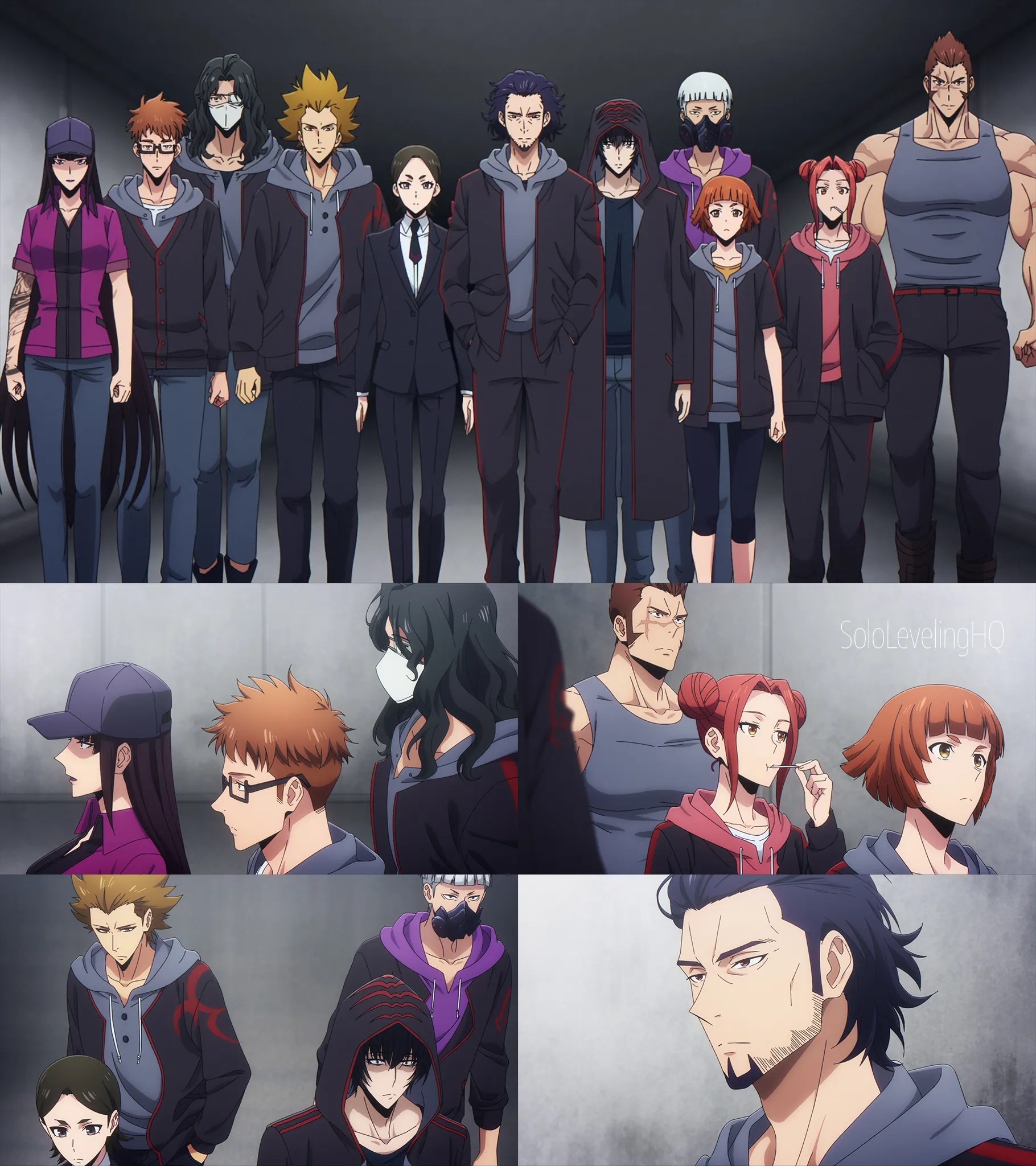
The Japanese Guild – Draw Sword Guild – does not meet the stringent threshold to be considered a mercenary organization. At first blush, this guild meets almost all of the requirements laid out in Article 47 e.g. Japan is not a part of the conflict but the guild members are and the guild members were not sent to South Korea as a part of Japan’s official armed forces, the guild is foreign, the members are not nationals of South Korea or live in the disputed territory, and are not part of Japan’s armed forces. What causes the Draw Sword Guild to fail this classification in this instance is that its incentive to participate in the raid was not purely profit or personal gain. It was motivated for self-preservation of its home country. Jeju exists close to Japan and the failure to eliminate the forces could threaten Japan’s future safety and therefore the guild’s own safety. The Draw Sword Guild recognized this at the higher level talks and combined its efforts with that of South Korean guilds to nullify a threat before it threatened the entire region.
If both are not mercenaries then what would they be?
Private Military Security Corporations
The closest analog for the guilds then in this instance would be as private military security corporations (PMSC). States have begun to use these organization’s in IACs and NIACs so the Montreaux Document was created to help articulate the legal obligations for PMSCs. Adopting the Montreaux Document, the International Code of Conduct for Private Security Service Providers (the code) offers a foundational framework in which the International Code of Conduct Association (ICOCA) applies to PMSCs globally. The Montreaux Document highlights that when a state hires a PMSC, the state is obligated to inform the PMSC of its IHL obligations and limitations. The Code builds upon these obligations by detailing how PMSC personnel must work within the state’s respective use of force limits and other international treaty obligations. The Code and the Montreaux Document notes that PMSCs are considered civilians under IHL and get those respective protections until they participate directly in hostilities except when in situations of self-defense. If they participate in hostilities, they lose their protections and can be prosecuted for war crimes both internationally and nationally. Further, if the PMSC violates IHL, then those actions are imputed upon the hiring state.
Both the South Korean guilds and Draw Sword Guild are considered PMSCs for the purpose of the Jeju Raid. Since the South Korean government contracted both the South Korean guilds and the Draw Sword Guild from Japan for the Jeju Raid, South Korea bears all responsibility for any IHL violations. For purposes of this article, it is assumed that South Korea had existing legislation that allowed for PMSCs to be incorporated under its standing military in times of crises thus permitting direct participation in hostilities and affords them the standard IHL protections for prisoners of war. Further, it is assumed that South Korea explained the IHL obligations to the guild members when they met on the South Korean warships prior to the raid launching and that the members are aware of their limitations. Further, each of the guilds belongs to their country’s respective hunter association which holds these guilds to a set standard. These associations when acting in concert are akin to ICOCA thus ensuring international legitimacy when handling certain actions.
Criminals or Protected?
Neither the Draw Sword Guilds or the South Korean guilds would be considered criminals under international law because they do not meet the classification of being a mercenary as explained above. As PMSCs, the Guilds are responsible for adhering to the Code and the Montreaux Document and ensuring their actions do not negatively effect the contracting state – South Korea.
The guilds were involved in a NIAC and thus are required to adhere to the rules of the Additional Protocols of the Geneva Conventions. Here, the Jeju Raid was a combined operation between the Japanese and South Korean governments via their guilds. The South Korean guilds were contracted and became under the control of the South Korean armed forces to be the main assaulting force against the Ants on Jeju Island. The Draw Sword guild was contracted to support the Korean guilds who were going after the Queen Ant but did not become directly a part of the South Korean military. The Draw Sword guild served as both a protective force to nullify any escaping insects from the island and to be an initial distraction to allow the assaulting force to pierce the island’s interior.
The raid resulted in no IHL violations. During the conflict, under the direction of the South Korean government, the guilds as PMSCs directly engaged the Ants and were successful in eliminating the encroaching threat without any IHL violations. If a violation had occurred, then South Korea as the contracting state would be held responsible internationally for IHL violations. Therefore, all parties involved in the raid are safe from any form of international or domestic prosecution.
Conclusion
The joint operation between the South Korean and Japanese guilds was a resounding success in more than one way. Strategically, the operation preserved both South Korea and Japan from future invasions from the Ants saving millions of lives. Legally, South Korea remained free from prosecution as no members involved in the Jeju Raid committed any IHL violations. This was able to be accomplished because South Korea: operated under the correct armed conflict legal framework, used its domestic laws to incorporate domestic PMSCs into its armed forces, properly contracted foreign PMSCs, and forced compliance of the PMSCs to IHL to ensure its international obligations under IHL were maintained. These are not easy things to do, but they are necessary to ensure lives are saved and order is maintained during and after armed conflicts.


